Strategy & Business Intelligence
Business intelligence is the practice of turning a company's operational data into a small number of trusted, consistently defined metrics that leadership uses to make decisions.
Every engagement is scoped and quoted individually after a diagnostic. We will tell you what this costs, and whether it is the work you actually need.
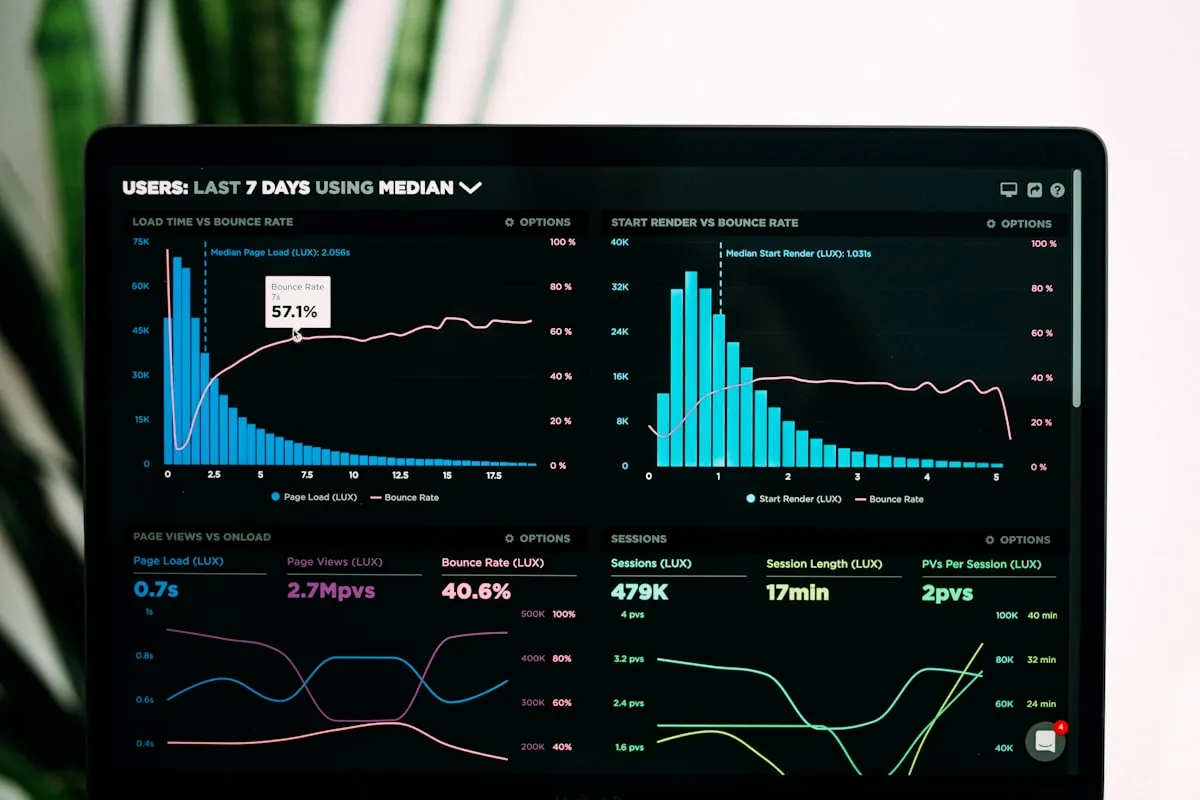
The common failure is not a shortage of data. It is that three teams calculate revenue three different ways, nobody trusts the dashboard, and decisions get made in the meeting from whoever's spreadsheet is open. Adding another visualisation tool does not fix this.
We start with definitions. What exactly counts as a qualified lead, an active customer, a churned account. Agreed in writing, implemented once, and used everywhere. Only then is it worth building the pipeline and the reporting on top, because a dashboard built on contested definitions gets argued with rather than acted on.
Scope
Every engagement is scoped in writing before work begins. This is the standard inclusion list for business intelligence.
How we work
Every reporting project that skips this ends in a meeting arguing about whose number is right. Written definitions signed off by the people who use them are the actual deliverable.
We start from the decisions leadership makes on a cycle and build backwards to the metrics required. Dashboards built from available data rather than needed decisions get opened twice.
Any number a human assembles monthly will eventually be late, wrong, or quietly abandoned when that person leaves.
Silent pipeline failures are worse than no reporting, because decisions continue to be made on stale numbers. Freshness and volume alerting is part of the build.
Questions
These services share the same objective and are usually more effective run together than separately.
Marketing analytics is the measurement layer that connects spend to outcome, implemented so the numbers are accurate, consented, and attributed to the channels that actually drove the result.
Go-to-market strategy is the decision set that determines who a business sells to, what it says to them, through which channels, at what price, and in what sequence, made before spend is committed rather than discovered afterwards.
CRM strategy is the design of how a business records, progresses and reports on customer relationships, the pipeline stages, data model, automation and process discipline that determine whether the system produces reliable forecasting or expensive data entry.
Competitor intelligence is the disciplined study of what rival businesses are actually doing (in search, content, advertising, product and pricing) using observable evidence rather than assumption, to inform where a business should compete and where it should not.
A short conversation about your situation, what is working and what is not. No obligation, and you will get a straight answer about whether this is the right service for you.
